Advanced Ultrasonography

Earlier detection of problems allows more successful treatment!

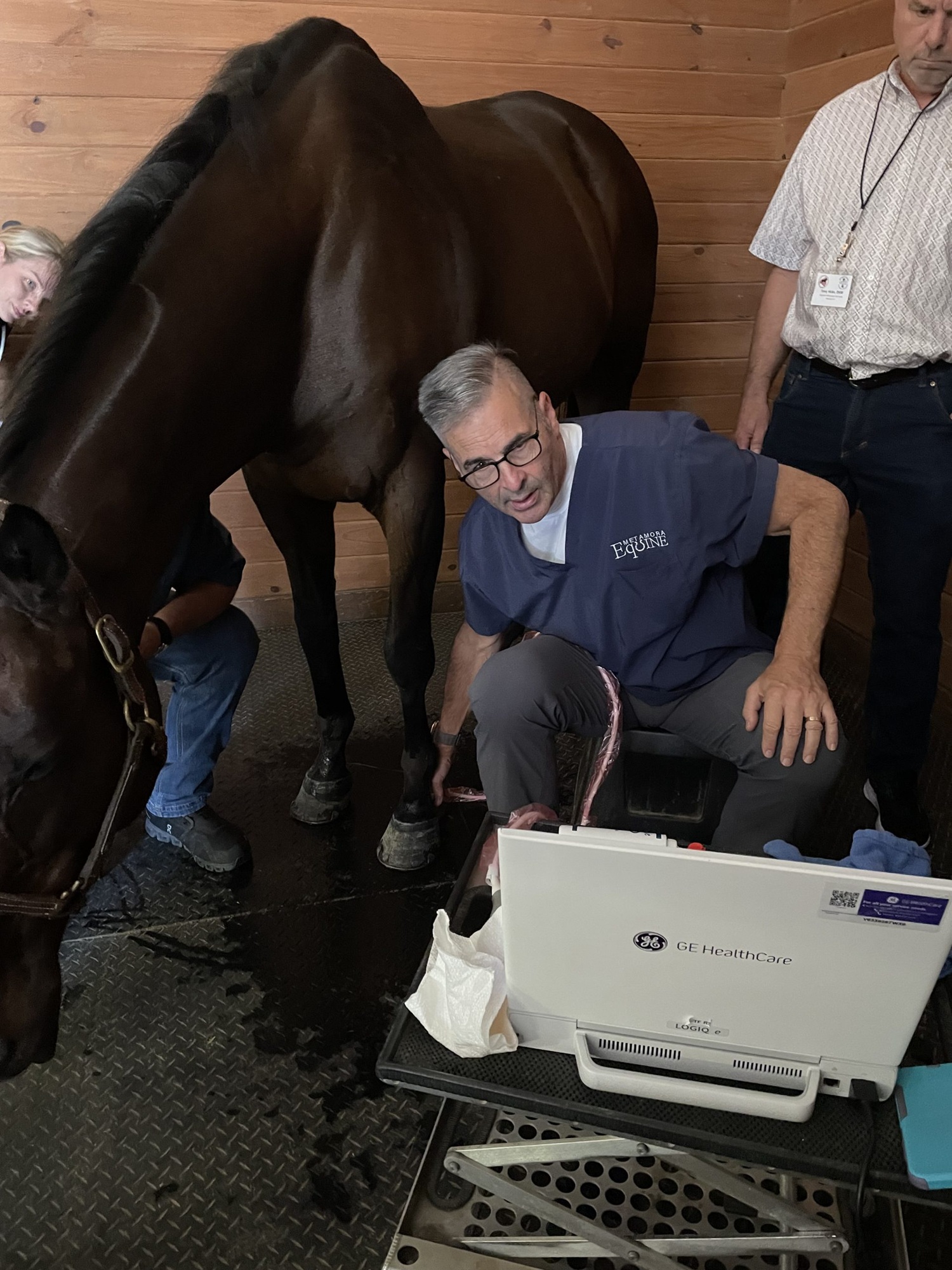
The use of high resolution ultrasound is of special interest to Dr. Thaler. Ultrasound technology has been used in equine medicine for the past 25 years. Ultrasound is a wonderful and very useful modality to image a variety of structures on the horse. Ultrasound imaging produces sound waves. It forms visual images by detecting changes in these sound waves as they reflect from body tissue. Ultrasound waves can penetrate all tissue except bone and air. Both the advancements of ultrasound equipment and operator technique have lead to exciting new applications which can be performed in the field.

Reproductive Ultrasound

With high resolution ultrasound, reproductive medicine has become much more precise and effective. Ovulation staging and pregnancy checking were once left to palpation by skilled practitioners. The use of ultrasound for reproductive medicine is now quite common place. As an example in Figure 1, the fetal heart beat can be detected as early as 24 days to allow validation of viability of the fetus. Color flow Doppler detects the heart and colorizes the structure as indicated by the yellow arrow. Similar diagnostics can be performed on late stage pregnancies using specialized curved array probes.
Figure 1

Abdominal Ultrasound

We are now able to evaluate the size and health of the intestine and other abdominal organs. When a horse is showing signs of colic, we can better determine if your horse needs to go to a referral hospital or if we can treat him at your barn. In Figure 2, we are able to see distended small bowel with thickened gut wall. This is an indicator of a serious colic in need of immediate surgical care. Applied technology such as this, allows real time decision making regarding colic evaluations.
Figure 2

Ocular Ultrasound
Trips to referral hospitals may also be avoided by increased abilities to image the eye. Ultra sounding through the upper eye lid allows imaging of the contents of the globe. In Figure 3, contents of the globe are related to the ultrasound image. Retinal detachment and cataracts are some of the problems that can be imaged using ultrasonography on the eye.

Figure 3

Lameness Diagnostics
Typically, radiographs are used to create an image of bones and joints. While high quality radiographs are essential, they typically only tell part of the problem. Very seldom bone injury occurs without concurrent soft tissue injury. Usually soft tissue trauma occurs first, followed by bony remodeling. It stands to reason that if we can detect these injuries earlier then we can treat them before irreparable damage occurs. In Figure 4, the high detail ultrasound probe images a small ligament of the pastern joint. The yellow arrows highlight the correlation.

In addition, while ultrasonography is unable to pass through bone, it is able to highlight the contour of bone very well. This allows imaging of structures higher up on the horse’s body (hips, back, sacrum, etc.) that are unable to be radiographed because of thickness.

Figure 4

Final Note:

Image capture (with comparisons) is essential for future reference and to facilitate consultation. As a note of caution: ultrasonography quality is highly operator and equipment dependant. Dr. Thaler is highly trained and very proficient in the use of high resolution ultrasound. The complete understanding of the musculoskeletal system and the biomechanics of the horse are essential elements to correctly identifying structures using a very high resolution ultrasound machine.

The use of ultrasound in combination with proper clinical assessment of your horse can provide solutions to soft tissue injuries involving muscles, ligaments, tendons, tendon sheaths and joint capsules. This translates to imaging that helps you monitor the effects of training as well as healing.

The best equipment tethered with a veterinarian that possesses a deep understanding of anatomy and biomechanics can provide a solution to your horse’s problem!